


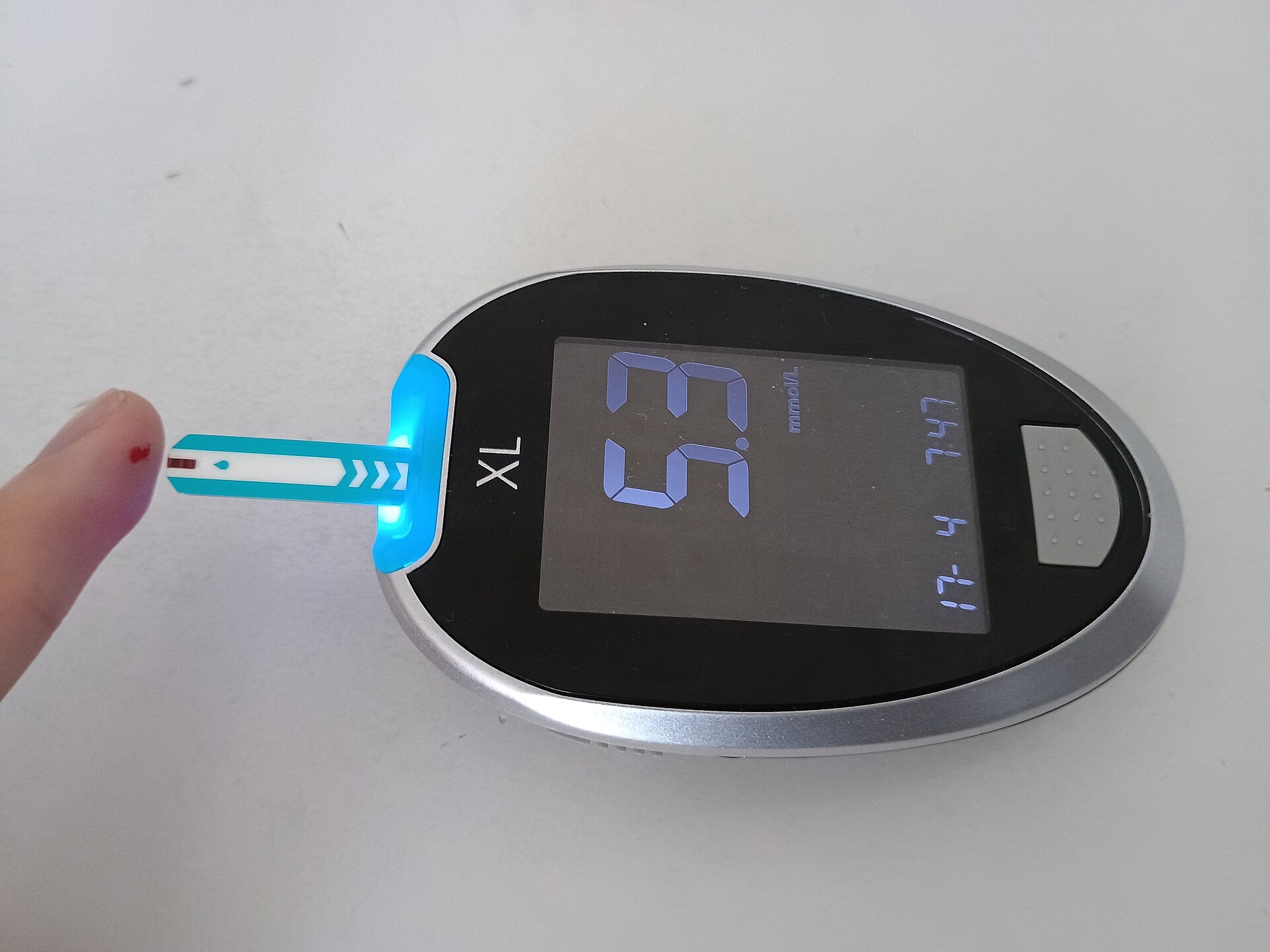
The most persuasive number in diabetes technology right now is five. Patients with type 2 diabetes who use continuous glucose monitors (CGMs) spend, on average, about five more hours per day with their blood sugar inside the target range compared with finger-prick monitoring alone. Five hours is a fifth of a life — and “time in range” has become the metric that endocrinologists watch most closely, because it tracks the thing that actually damages bodies: cumulative exposure to high and low glucose.
From Snapshots to a Live Feed
A finger-prick test is a photograph; a CGM is a film. The sensor, worn on the arm or abdomen, reads glucose in the fluid between cells every few minutes and streams the result to a phone. That continuity changes behaviour in ways sparse data cannot: patients see exactly what a particular meal did to them by 2 p.m., watch exercise pull a rising line back down, and catch nocturnal lows they never knew existed. Our AI and data coverage examines how continuous data streams are quietly restructuring chronic-disease care.
Why Time in Range Predicts Outcomes
Complications of diabetes — eye, kidney, nerve and cardiovascular damage — correlate with long-term glucose exposure. The traditional marker, HbA1c, averages three months into a single number and hides the swings. Time in range captures both the average and the volatility, which is why international consensus guidance published through the American Diabetes Association’s journals now sets explicit time-in-range targets alongside HbA1c. The roughly five-hour improvement seen with CGM use represents a clinically meaningful shift in that exposure — the kind associated with measurably lower complication risk over years.
The Access Question
CGMs were once reserved mainly for type 1 diabetes and insulin-intensive regimens. The evidence in type 2 — including in patients not using insulin — has pushed guidelines and, unevenly, insurance coverage toward wider access. Cost remains the friction: sensors are consumables, replaced every ten to fourteen days, and out-of-pocket prices exclude exactly the populations with the highest diabetes burden. Cheaper over-the-counter models have begun appearing, aimed as much at metabolic curiosity as at diagnosed disease.
The Ecosystem Growing Around the Sensor
A CGM rarely works alone anymore. Readings flow into apps that overlay meals, activity and medication; into clinician dashboards that flag the patients drifting out of range this week; and, for insulin users, into pumps that adjust delivery automatically in response to the sensor’s predictions. Each layer multiplies the value of the underlying stream — and multiplies the data’s sensitivity, which is why glucose data is becoming a live topic in health-privacy debates. Continuous metabolic data reveals routines, diets and even religious observance; who may see it, and for what, is a policy question trailing the technology.
Employers and insurers are entering the picture too, subsidising sensors within wellness programmes in the hope that better-controlled diabetes today is cheaper than its complications tomorrow. The five-hours-in-range statistic is the currency of those negotiations: a measurable, near-term outcome in a field where benefits usually take a decade to count. Expect the sensor’s role to keep expanding — from medical device, to coaching platform, to bargaining chip in how chronic care gets paid for.
Data Abundance, New Problems
Two hundred and eighty-eight readings a day create their own challenges: alarm fatigue, anxiety spirals over normal fluctuations, and clinicians drowning in patient data without time to review it. The next phase of CGM development is therefore software — trend interpretation, predictive alerts and coaching layers that turn a firehose of numbers into a handful of decisions. The five-hour figure is the headline; the infrastructure learning to use it is the story. Follow health-data developments on our homepage.
